-
스프링부트 게시판 (2)이커머스 devops 2025. 11. 27. 11:28
댓글 요구사항
• 댓글 조회, 생성, 삭제 API
• 댓글 목록 조회 API
• 계층형
• 최대 2 depth의 대댓글
• 무한 depth의 대댓글
• 계층별 오래된 순 정렬
• 페이지 번호, 무한 스크롤
• 하위 댓글이 모두 삭제되어야 상위 댓글을 삭제할 수 있다
• 하위 댓글이 없으면, 댓글은 즉시 삭제된다
• 하위 댓글이 있으면, 댓글은 삭제 표시만 된다
댓글 테이블 설계 –최대 2 depth
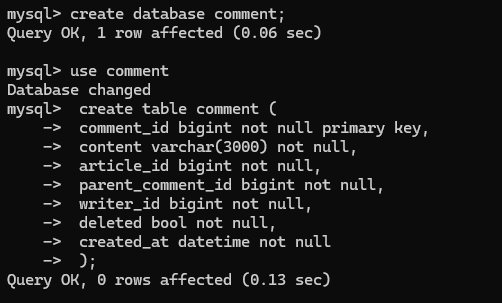
comment - build.gradle 수정
dependencies {
    implementation 'org.springframework.boot:spring-boot-starter-web'
    implementation 'org.springframework.boot:spring-boot-starter-data-jpa'
    runtimeOnly 'com.mysql:mysql-connector-j'
    implementation project(':common:snowflake')
}
comment - application.yml 수정
server:
  port: 9001

spring:
  application:
    name: springboot-board-article-service
  datasource:
    driver-class-name: com.mysql.cj.jdbc.Driver
    url: jdbc:mysql://127.0.0.1:3306/article
    username: root
    password: root
  jpa:
    database-platform: org.hibernate.dialect.MySQLDialect
    open-in-view: false
    show-sql: true
    hibernate:
      ddl-auto: none
comment - repository, service 작성
@Repository
public interface CommentRepository extends JpaRepository<Comment, Long> {
    @Query(
            value = "select count(*) from (" +
                    "   select comment_id from comment " +
                    "   where article_id = :articleId and parent_comment_id = :parentCommentId" +
                    "   limit :limit" +
                    ") t",
            nativeQuery = true
    )
    Long countBy(
            @Param("articleId") Long articleId,
            @Param("parentCommentId") Long parentCommentId,
            @Param("limit") Long limit
    );
}
@Service @RequiredArgsConstructor public class CommentService { private final CommentRepository commentRepository; private final Snowflake snowflake = new Snowflake(); @Transactional public CommentResponse create(CommentCreateRequest request) { Comment parent = findParent(request); Comment comment = commentRepository.save( Comment.create( snowflake.nextId(), request.getContent(), parent == null ? null : parent.getParentCommentId(), request.getArticleId(), request.getWriterId() ) ); return CommentResponse.from(comment); } private Comment findParent(CommentCreateRequest request) { Long parentCommentId = request.getParentCommentId(); if (parentCommentId == null) { return null; } return commentRepository.findById(parentCommentId) .filter(not(Comment::isDeleted)) .filter(Comment::isRoot) .orElseThrow(); } public CommentResponse read(Long commentId) { return CommentResponse.from(commentRepository.findById(commentId).orElse(null)); } @Transactional public void delete(Long commentId) { commentRepository.findById(commentId) .filter(not(Comment::isDeleted)) .ifPresent(comment -> { if (hasChildren(comment)) { comment.delete(); } else { delete(comment); } }); } private boolean hasChildren(Comment comment) { return commentRepository.countBy(comment.getArticleId(), comment.getCommentId(), 2L) == 2; } private void delete(Comment comment) { commentRepository.delete(comment); if (!comment.isRoot()) { commentRepository.findById(comment.getParentCommentId()) .filter(Comment::isDeleted) .filter(not(this::hasChildren)) .ifPresent(this::delete); } } }@ExtendWith(MockitoExtension.class) class CommentServiceTest { @InjectMocks CommentService commentService; @Mock CommentRepository commentRepository; @Test @DisplayName("삭제할 댓글이 자식 있으면, 삭제 표시만 한다.") void deleteShouldMarkDeletedIfHashChildren() { // given Long articleId = 1L; Long commentId = 2L; Comment comment = createComment(articleId, commentId); given(commentRepository.findById(commentId)) .willReturn(Optional.of(comment)); given(commentRepository.countBy(articleId, commentId, 2L)).willReturn(2L); // when commentService.delete(commentId); // then verify(comment).delete(); } private Comment createComment(Long articleId, Long commentId) { Comment comment = mock(Comment.class); given(comment.getArticleId()).willReturn(articleId); given(comment.getCommentId()).willReturn(commentId); return comment; } private Comment createCommentWithParent(Long articleId, Long commentId, Long parentId) { Comment comment = createComment(articleId, commentId); given(comment.getParentCommentId()).willReturn(parentId); return comment; } @Test @DisplayName("하위 댓글이 삭제되고 삭제되지 않은 부모면 하위 댓글만 삭제한다.") void deleteShouldDeleteChildOnlyIfNotDeletedParent() { // given Long articleId = 1L; Long commentId = 2L; Long parentId = 1L; Comment comment = createCommentWithParent(articleId, commentId, parentId); given(comment.isRoot()).willReturn(false); Comment parentComment = mock(Comment.class); given(parentComment.isDeleted()).willReturn(false); given(commentRepository.findById(commentId)) .willReturn(Optional.of(comment)); given(commentRepository.countBy(articleId, commentId, 2L)).willReturn(1L); given(commentRepository.findById(parentId)).willReturn(Optional.of(parentComment)); // when commentService.delete(commentId); // then verify(commentRepository).delete(comment); verify(commentRepository, never()).delete(parentComment); } @Test @DisplayName("하위 댓글이 삭제되고 삭제된 부모면, 재귀적으로 모두 삭제한다.") void deleteShouldDeleteAllRecursivelyDeleteParent() { // given Long articleId = 1L; Long commentId = 2L; Long parentId = 1L; Comment comment = createCommentWithParent(articleId, commentId, parentId); given(comment.isRoot()).willReturn(false); Comment parentComment = createComment(articleId, parentId); given(parentComment.isRoot()).willReturn(true); given(parentComment.isDeleted()).willReturn(true); given(commentRepository.findById(commentId)) .willReturn(Optional.of(comment)); given(commentRepository.countBy(articleId, commentId, 2L)).willReturn(1L); given(commentRepository.findById(parentId)).willReturn(Optional.of(parentComment)); given(commentRepository.countBy(articleId, parentId, 2L)).willReturn(1L); // when commentService.delete(commentId); // then verify(commentRepository).delete(comment); verify(commentRepository).delete(parentComment); } }data init
@SpringBootTest
public class DataInitializer {
    @PersistenceContext
    EntityManager em;

    @Autowired
    TransactionTemplate transactionTemplate;

    Snowflake snowflake = new Snowflake();
    CountDownLatch latch = new CountDownLatch(EXECUTE_COUNT);

    static final int BULK_INSERT_SIZE = 2000;
    static final int EXECUTE_COUNT = 6000;

    @Test
    void initialize() throws InterruptedException {
        ExecutorService executorService = Executors.newFixedThreadPool(10);
        for (int i = 0; i < EXECUTE_COUNT; i++) {
            executorService.submit(() -> {
                insert();
                latch.countDown();
                System.out.println("latch.getCount() = " + latch.getCount());
            });
        }
        latch.await();
        executorService.shutdown();
    }

    void insert() {
        transactionTemplate.executeWithoutResult(status -> {
            Comment prev = null;
            for (int i = 0; i < BULK_INSERT_SIZE; i++) {
                Comment comment = Comment.create(
                        snowflake.nextId(),
                        "content",
                        i % 2 == 0 ? null : prev.getCommentId(),
                        1L,
                        1L
                );
                prev = comment;
                em.persist(comment);
            }
        });
    }
}
# application.yml jpa: database-platform: org.hibernate.dialect.MySQLDialect open-in-view: false show-sql: false hibernate: ddl-auto: none게시판 데이터 삽입할 때는 귀찮아서 변경 안 했었는데 이번에는 "show-sql: false"로 변경하고 돌렸다
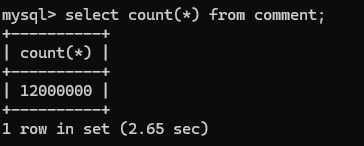
"show-sql: true"인 상태라면 모든 SQL 쿼리가 콘솔에 출력되며 콘솔 버퍼가 가득차고 intelliJ가 모든 로그를 메모리에 저장하기 때문에 RAM 부족 경고가 뜨며 종료됐던거였다 ..........................!!
노트북 문제인가 했는데 .....
인덱스 생성
create index idx_article_id_parent_comment_id_comment_id on comment ( article_id asc, parent_comment_id asc, comment_id asc );
N번 페이지에서 M개의 댓글 조회
select * from ( select comment_id from comment where article_id = {article_id} order by parent_comment_id asc, comment_id asc limit {limit} offset {offset} ) t left join comment on t.comment_id = comment.comment_id;
- comment_id : 서브쿼리로 커버링 인덱스 뽑아내서 쿼리 실행
댓글 개수 조회
select count(*) from ( select comment_id from comment where article_id = {article_id} limit {limit} ) t;
- comment_id : 서브쿼리로 커버링 인덱스 뽑아내서 쿼리 실행
무한 스크롤 댓글 조회
- 1번 페이지
select * from comment where article_id = {article_id} order by parent_comment_id asc, comment_id asc limit {limit};
- 2번 페이지 이상 (기준점 = last_parent_comment_id, last_comment_id)
select * from comment where article_id = {article_id} and ( parent_comment_id > {last_parent_comment_id} or (parent_comment_id = {last_parent_comment_id} and comment_id > {last_comment_id}) ) order by parent_comment_id asc, comment_id asc limit {limit};@Repository public interface CommentRepository extends JpaRepository<Comment, Long> { @Query( value = "select comment.comment_id, comment.content, comment.parent_comment_id, comment.article_id, " + "comment.writer_id, comment.deleted, comment.created_at " + "from ( " + " select comment_id from comment where article_id = :articleId " + " order by parent_comment_id asc, comment_id asc " + " limit :limit offset :offset " + ") t left join comment on t.comment_id = comment.comment_id", nativeQuery = true ) List<Comment> findAll( @Param("articleId") Long articleId, @Param("offset") Long offset, @Param("limit") Long limit ); @Query( value = "select count(*) from (" + " select comment_id from comment where article_id = :articleId limit :limit" + ") t", nativeQuery = true ) Long count( @Param("articleId") Long articleId, @Param("limit") Long limit ); @Query( value = "select comment.comment_id, comment.content, comment.parent_comment_id, comment.article_id, " + "comment.writer_id, comment.deleted, comment.created_at " + "from comment " + "where article_id = :articleId " + "order by parent_comment_id asc, comment_id asc " + "limit :limit", nativeQuery = true ) List<Comment> findAllInfiniteScroll( @Param("articleId") Long articleId, @Param("limit") Long limit ); @Query( value = "select comment.comment_id, comment.content, comment.parent_comment_id, comment.article_id, " + "comment.writer_id, comment.deleted, comment.created_at " + "from comment " + "where article_id = :articleI and (" + " parent_comment_id > :lastParentCommentId or " + " (parent_comment_id = :lastParentCommentId and comment_id > : lastCommentId)" + ") " + "order by parent_comment_id asc, comment_id asc " + "limit :limit", nativeQuery = true ) List<Comment> findAllInfiniteScroll( @Param("articleId") Long articleId, @Param("lastParentCommentId") Long lastParentCommentId, @Param("lastCommentId") Long lastCommentId, @Param("limit") Long limit ); }댓글 무한 depth
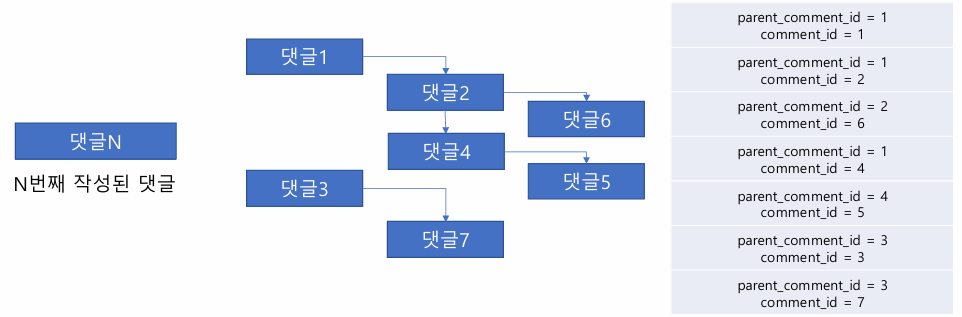
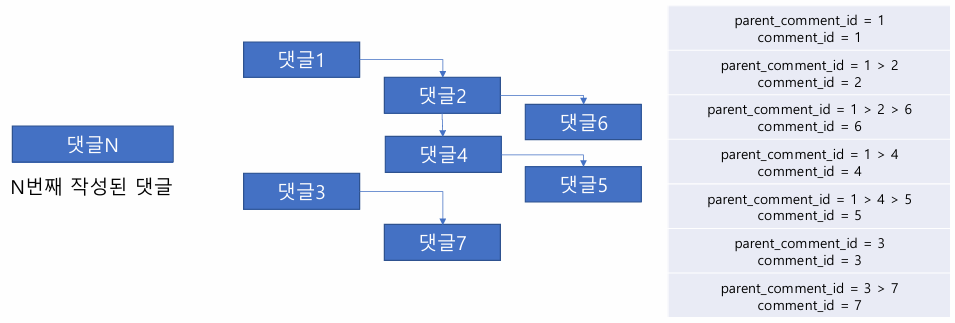
- 무한 depth에서는 상하위 댓글이 재귀적으로 무한할 수 있으므로 정렬 순을 나타내기 위해 모든 상위 댓글의 정보가 필요할 수 있다
- 댓글 구조를 트리로 본다면 root node부터 각 node에 도달하기 위한 경로로 이해할 수 있다
- 경로에 의해 정렬 순서가 명확하기 때문에 경로 정보로 인덱스를 생성하면 페이징을 처리할 수 있다
- 각 depth 만큼 컬럼을 만들어서, 각 depth별 댓글 ID를 관리해줄 수있지만 depth는 무한할 수 있어야 하기 때문에 테이블 구조가 복잡해질 수 있다
- 문자열 컬럼 1개로 경로 정보를 만든다
- 각 depth에서의 순서를 문자열로 나타내고 문자열을 순서대로 결합하여 경로를 나타낸다
- Path Enumeration(경로 열거) 방식을 취할 수 있다
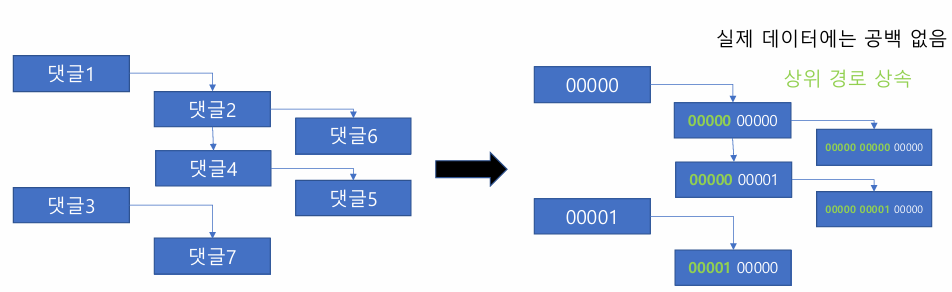

- 각 경로는 상위 댓글의 경로를 상속하여 각 댓글마다 독립적이고 순차적인(문자열 순서) 경로가 생성된다
- 각 자릿수 하나는 0-9, A-Z, a-z 62개의 문자를 사용하여 (문자열 순서 0-9 < A-Z < a-z) 표현할 수 있는 경로의 범위가 각 경로 별로 62^5 = 916,132,832개로 제한된다
- “00000” 부터 “zzzzz”까지 증가하는 문자열의 덧셈
- 62진수 문자열을 10진수 숫자로 바꿔서 +1 한 다음 숫자를 대응하는 문자 열로 다시 바꿔준다
데이터베이스 collation

- 문자열을 정렬하고 비교하는 방법을 정의하는 설정
- 대소문자 구분, 악센트 구분, 언어별 정렬 순서 등을 포함
- utf8mb4_0900_ai_ci
- utf8mb4 = 각 문자 최대 4바이트 utf8 지원
- 0900 = 정렬 방식 버전
- ai = 악센트 비구분
- ci = 대소문자 비구분
무한 depth 댓글 테이블 설계
create table comment_v2 (
comment_id bigint not null primary key,
content varchar(3000) not null,
article_id bigint not null,
writer_id bigint not null,
path varchar(25) character set utf8mb4 collate utf8mb4_bin not null,
deleted bool not null,
created_at datetime not null
);- 댓글 경로를 나타내기 위한 path 컬럼 추가
- path 컬럼 utf8mb4_bin 설정
- parent_id 삭제
- depth를 더 늘려야 한다면 VARCHAR 크기 조절하면 됨
create unique index idx_article_id_path on comment_v2( article_id asc, path asc );
- path에 인덱스 생성해 정렬 데이터 관리
- 페이징에도 사용 가능
- path는 독립적인 경로를 갖기 때문에 uniqe index로 생성
- 애플리케이션에서 동시성 문제 방지
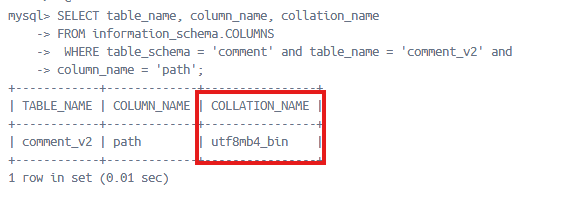
- comment_v2 테이블 path 컬럼에 collation 설정 적용 확인

- idx_article_id_path 인덱스 사용
- 인덱스가 데이터를 포함하기 때문에 Extras=Using index를 통해 커버링 인덱스로 동작
- Backward index scan : 인덱스를 역순으로 스캔하는 것
- 인덱스 트리 leaf node 간에 연결된 양방향 포인터 활용
public interface CommentV2Repository extends JpaRepository<CommentV2, Long> {
    @Query("select c from CommentV2 c where c.commentPath.path = :path")
    Optional<CommentV2> findByPath(@Param("path") String path);

    @Query(
            value = "select path from comment_v2 " +
                    "where article_id = :articleId and path > :pathPrefix and path like :pathPrefix " +
                    "order by path desc limit 1",
            nativeQuery = true
    )
    Optional<String> findDescendantsTopPath(
            @Param("articleId") Long articleId,
            @Param("pathPrefix") String pathPrefix
    );

    @Query(
            value = "select comment_v2.comment_id, comment_v2.content, comment_v2.path, comment_v2.article_id, " +
                    "comment_v2.writer_id, comment_v2.deleted, comment_v2.created_at " +
                    "from (" +
                    "    select comment_id from comment_v2 where article_id = :articleId " +
                    "    order by path asc " +
                    "    limit :limit offset :offset " +
                    ") t left join comment_v2 on t.comment_id = comment_v2.comment_id",
            nativeQuery = true
    )
    List<CommentV2> findAll(
            @Param("articleId") Long articleId,
            @Param("offset") Long offset,
            @Param("limit") Long limit
    );

    @Query(
            value = "select count(*) from (" +
                    "    select comment_id from comment_v2 where article_id = :articleId limit :limit " +
                    ") t",
            nativeQuery = true
    )
    Long count(@Param("articleId") Long articleId, @Param("limit") Long limit);

    @Query(
            value = "select comment_v2.comment_id, comment_v2.content, comment_v2.path, comment_v2.article_id, " +
                    "comment_v2.writer_id, comment_v2.deleted, comment_v2.created_at " +
                    "from comment_v2 " +
                    "where article_id = :articleId " +
                    "order by path asc " +
                    "limit :limit",
            nativeQuery = true
    )
    List<CommentV2> findAllInfiniteScroll(@Param("articleId") Long articleId, @Param("limit") Long limit);

    @Query(
            value = "select comment_v2.comment_id, comment_v2.content, comment_v2.path, comment_v2.article_id, " +
                    "comment_v2.writer_id, comment_v2.deleted, comment_v2.created_at " +
                    "from comment_v2 " +
                    "where article_id = :articleId and path > :lastPath " +
                    "order by path asc " +
                    "limit :limit",
            nativeQuery = true
    )
    List<CommentV2> findAllInfiniteScroll(
            @Param("articleId") Long articleId,
            @Param("lastPath") String lastPath,
            @Param("limit") Long limit);
}
@Service @RequiredArgsConstructor public class CommentV2Service { private final Snowflake snowflake = new Snowflake(); private final CommentV2Repository commentRepository; @Transactional public CommentResponse create(CommentCreateRequestV2 request) { CommentV2 parent = findParent(request); CommentPath parentCommentPath = parent == null ? CommentPath.create("") : parent.getCommentPath(); CommentV2 comment = commentRepository.save( CommentV2.create( snowflake.nextId(), request.getContent(), request.getArticleId(), request.getWriterId(), parentCommentPath.createChildCommentPath( commentRepository.findDescendantsTopPath(request.getArticleId(), parentCommentPath.getPath()) .orElse(null) ) ) ); return CommentResponse.from(comment); } private CommentV2 findParent(CommentCreateRequestV2 request) { String parentPath = request.getParentPath(); if (parentPath == null) { return null; } return commentRepository.findByPath(parentPath) .filter(not(CommentV2::isDeleted)) .orElseThrow(); } public CommentResponse read(Long commentId) { return CommentResponse.from( commentRepository.findById(commentId).orElseThrow() ); } @Transactional public void delete(Long commentId) { commentRepository.findById(commentId) .filter(not(CommentV2::isDeleted)) .ifPresent(comment -> { if (hasChildren(comment)) { comment.delete(); } else { delete(comment); } }); } private boolean hasChildren(CommentV2 comment) { return commentRepository.findDescendantsTopPath( comment.getArticleId(), comment.getCommentPath().getPath() ).isPresent(); } private void delete(CommentV2 comment) { commentRepository.delete(comment); if (!comment.isRoot()) { commentRepository.findByPath(comment.getCommentPath().getParentPath()) .filter(CommentV2::isDeleted) .filter(not(this::hasChildren)) .ifPresent(this::delete); } } public CommentPageResponse readAll(Long articleId, Long page, Long pageSize) { return CommentPageResponse.of( commentRepository.findAll(articleId, (page - 1) * pageSize, pageSize).stream() .map(CommentResponse::from) .toList(), commentRepository.count(articleId, PageLimitCalculator.calculatePageLimit(page, pageSize, 10L)) ); } public List<CommentResponse> readAllInfiniteScroll(Long articleId, String lastPath, Long pageSize) { List<CommentV2> comments = lastPath == null ? commentRepository.findAllInfiniteScroll(articleId, pageSize) : commentRepository.findAllInfiniteScroll(articleId, lastPath, pageSize); return comments.stream() .map(CommentResponse::from) .toList(); } }public class CommentApiV2Test { RestClient restClient = RestClient.create("http://localhost:9001"); @Test void create() { CommentResponse response1 = createComment(new CommentCreateRequestV2(1L, "my comment1", null, 1L)); CommentResponse response2 = createComment(new CommentCreateRequestV2(1L, "my comment2", response1.getPath(), 1L)); CommentResponse response3 = createComment(new CommentCreateRequestV2(1L, "my comment3", response2.getPath(), 1L)); System.out.println("commentId=%s".formatted(response1.getCommentId())); System.out.println("\tcommentId=%s".formatted(response2.getCommentId())); System.out.println("\t\tcommentId=%s".formatted(response3.getCommentId())); // commentId=252238814154854400 // commentId=252238814641393664 // commentId=252238814784000000 System.out.println("commentPath=%s".formatted(response1.getPath())); System.out.println("\tcommentPath=%s".formatted(response2.getPath())); System.out.println("\t\tcommentPath=%s".formatted(response3.getPath())); // commentPath=00000 // commentPath=0000000000 // commentPath=000000000000000 } CommentResponse createComment(CommentCreateRequestV2 request) { return restClient.post() .uri("/v2/comments") .body(request) .retrieve() .body(CommentResponse.class); } @Test void read() { CommentResponse response = restClient.get() .uri("/v2/comments/{commentId}", 252238814154854400L) .retrieve() .body(CommentResponse.class); System.out.println("response = " + response); // response = CommentResponse(commentId=252238814154854400, content=my comment1, parentCommentId=null, path=00000, articleId=1, writerId=1, deleted=false, createdAt=2025-11-27T10:07) } @Test void delete() { restClient.delete() .uri("/v2/comments/{commentId}", 252238814784000000L) .retrieve(); } @AllArgsConstructor @Getter public static class CommentCreateRequestV2 { private Long articleId; private String content; private String parentPath; private Long writerId; } @Test void readAll() { CommentPageResponse response = restClient.get() .uri("/v2/comments?articleId=1&pageSize=10&page=1") .retrieve() .body(CommentPageResponse.class); System.out.println("response.getCommentCount() = " + response.getCommentCount()); for (CommentResponse comment : response.getComments()) { System.out.println("comment.getCommentId() = " + comment.getCommentId()); } } @Test void readAllInfiniteScroll() { List<CommentResponse> response1 = restClient.get() .uri("/v2/comments/infinite-scroll?articleId=1&pageSize=5") .retrieve() .body(new ParameterizedTypeReference<List<CommentResponse>>() {}); System.out.println("first Page"); for (CommentResponse response : response1) { System.out.println("response.getCommentId() = " + response.getCommentId()); } String lastPath = response1.getLast().getPath(); List<CommentResponse> response2 = restClient.get() .uri("/v2/comments/infinite-scroll?articleId=1&pageSize=5&lastPath=%s".formatted(lastPath)) .retrieve() .body(new ParameterizedTypeReference<List<CommentResponse>>() {}); System.out.println("second Page"); for (CommentResponse response : response2) { System.out.println("response.getCommentId() = " + response.getCommentId()); } } }728x90'이커머스 devops' 카테고리의 다른 글
스프링부트게시판 (4) (0) 2025.11.29 스프링부트 게시판 (3) (0) 2025.11.28 스프링부트 게시판 (1) (1) 2025.11.25 Distributed Relational Database (0) 2025.11.25 OSIV와 성능 최적화 (0) 2025.11.21